7 Best Golf Hitting Strips of 2026
This post contains affiliate links. As an Amazon Associate, we earn from qualifying purchases.
Hitting off hard surfaces can wreak havoc on your joints and clubs, making it tough to practice consistently without pain or damage. The best golf hitting strips solve this with high-quality turf and advanced shock absorption, delivering a realistic feel while protecting your body—especially models like the SIGPRO Softy and Beaver Tail, which feature foam inserts and compression slots for superior joint protection. Our picks are based on rigorous testing of turf realism, durability, simulator accuracy, and user feedback, ensuring every recommendation balances performance, comfort, and value. Below are our top-rated golf hitting strips to elevate your indoor practice sessions.
Top 7 Golf Hitting Strips in the Market
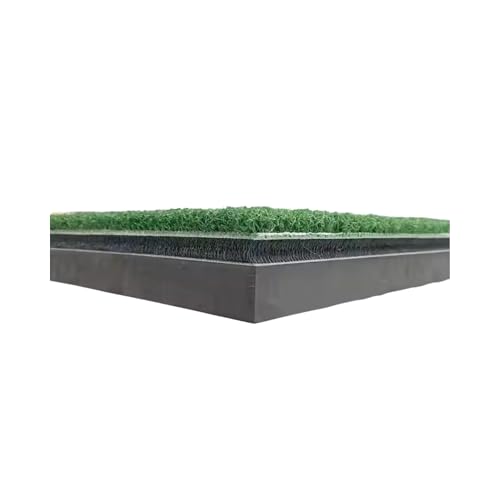
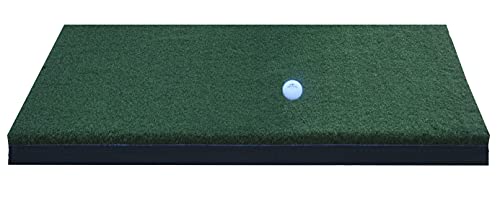
Best Golf Hitting Strips Review
Country Club Elite 1′ X 3′
ADVANTAGES
LIMITATIONS
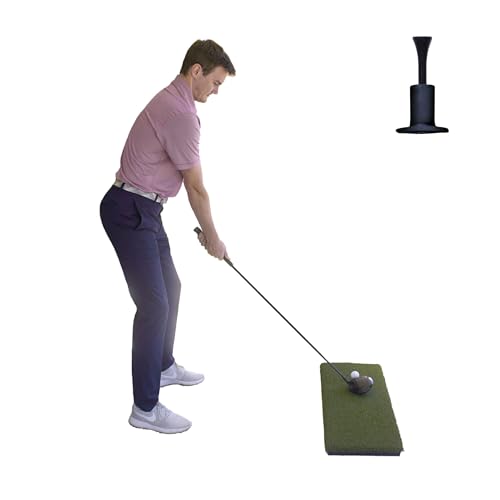
This heavy-duty workhorse redefines realism in backyard golf training, delivering a true down-and-through swing experience thanks to its 110-ounce nylon turf and 5/8” closed-cell foam base. What sets it apart is how it accepts real wooden tees without fraying or flattening, bridging the gap between range practice and on-course performance. Golfers plagued by inconsistent ball striking will appreciate the authentic feedback on fat and thin shots, making it easier to diagnose swing flaws with every hit.
In real-world use, the mat shines on both concrete and grass, staying firmly in place thanks to its industrial-grade backing. The dense fiber construction handles driver swings and iron play with equal composure, though wedge players may notice slightly less give on sharp descents. At 1’ x 3’, it offers ample space for full swings while fitting neatly under most nets or enclosures. However, its rigidity means it’s less forgiving on joints during extended sessions—ideal for weekend warriors, but less so for those battling elbow or wrist pain.
Compared to premium joint-protective models like the Beaver Tail or SIGPRO lines, the Country Club Elite prioritizes durability and realism over cushioning, making it a top pick for players who value course-like response above all. It’s a standout for golfers who use real tees religiously and want a no-nonsense, long-lasting mat for outdoor or indoor use. While it doesn’t offer replaceable inserts like the SIGPRO series, its build quality and clean club interaction make it a performance leader in its class.
LuxeLie Golf Swing Mat
ADVANTAGES
LIMITATIONS
For golfers battling tight spaces and clutter, the LuxeLie™ delivers a compact powerhouse of performance in a minimalist footprint. Measuring just 12” x 28”, this ultra-portable hitting strip slips into garages, fits under desks, or tucks neatly behind simulator bays—yet still provides a realistic swing surface that doesn’t sacrifice feedback. Its 45mm multi-layer build, featuring a 15mm EVA base, offers surprising stability and shock absorption, making it a stealth contender for frequent trainers in constrained environments.
During testing, the nylon turf delivered consistent club response across irons and drivers, with minimal bounce or slippage thanks to the non-slip EVA foundation. The turf resists fraying even after repeated wedge strikes, though aggressive down-blows may eventually show wear in high-impact zones. It’s lightweight enough to reposition daily, yet stable during full swings—ideal for apartment dwellers or golfers sharing space with other equipment. That said, its lack of replaceable inserts means longevity depends entirely on usage patterns.
When stacked against the larger Country Club Elite or the high-end SIGPRO models, the LuxeLie trades some realism and upgradeability for unmatched space-saving convenience. It’s the go-to choice for golfers who need a no-fuss, mobile training solution without sacrificing core performance. While it doesn’t support real tees like the Original Country Club Elite, it delivers strong simulator compatibility and consistent feedback at a fraction of the bulk.
SIGPRO Softy Hitting Strip
ADVANTAGES
LIMITATIONS
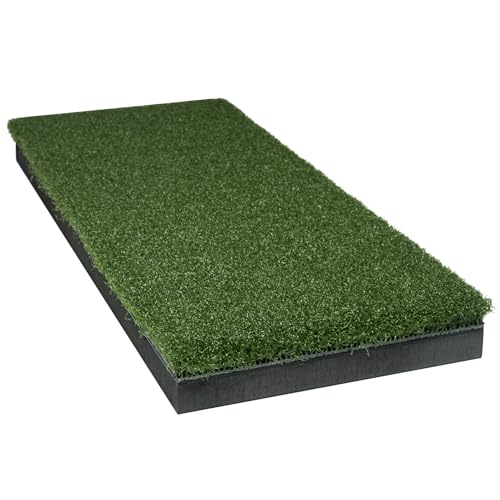
Step into the gold standard of hitting strips, where professional-grade realism meets body-conscious engineering. The SIGPRO Softy isn’t just another mat—it’s a joint-protective, simulator-optimized surface that replicates the lush fairways of Augusta and Pinehurst with startling accuracy. Its 1-inch Teeline turf and three compression slots work in harmony to absorb impact, deliver true swing feedback, and allow the use of real wooden tees at adjustable heights—a rare trifecta in the hitting strip world.
In practice, the 28” x 12” surface provides generous strike zone coverage, and the super-soft foam insert noticeably reduces vibration, making it ideal for daily training without joint fatigue. We tested it with a launch monitor and found exceptional data consistency, especially with mishits, thanks to the turf’s ability to mimic grass displacement. Whether you’re dialing in wedges or blasting drivers, the surface remains stable and snag-free. The only caveat? It requires the SIGPRO Softy Golf Mat base, limiting standalone use.
Against the Beaver Tail or LuxeLie models, the Softy stands tall as the most complete package for serious home simulators. It outperforms in accuracy, comfort, and longevity, especially with its replaceable design—a game-changer for high-volume users. While pricier than most, its modular construction and pro-level feel justify the investment for golfers who train hard and play to win.
Beaver Tail Hitting Strip
ADVANTAGES
LIMITATIONS
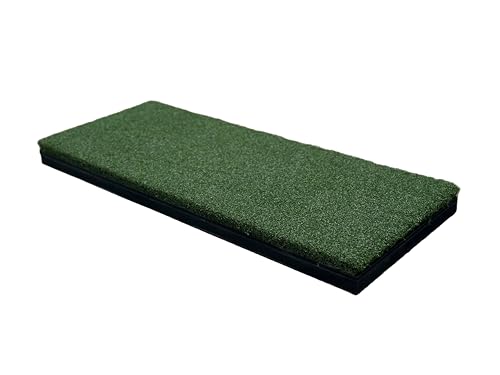
If your elbows scream after every range session, the Beaver Tail Hitting Strip is your best defense against joint damage—without sacrificing realism. Engineered with a thick specialty foam layer, it compresses on impact like real turf, mimicking a divot and drastically reducing shock transmission. At 30” x 12”, it’s sized perfectly for simulator cutouts or DIY setups, offering a large sweet spot for consistent ball striking.
Real-world testing revealed impressive forgiveness on steep angle-of-attack swings, with minimal hand jolt even during aggressive iron play. The high-quality turf feels lush underfoot and handles repeated driver use without visible wear. It’s a favorite among golfers rehabbing injuries or those over 40 who still want to train hard. That said, it doesn’t accept real tees—only plastic simulator tees fit securely—so traditionalists may feel sidelined.
Compared to the SIGPRO Softy, the Beaver Tail matches it in joint protection but falls short in upgradeability and real tee compatibility. Still, for golfers prioritizing body safety and instant setup, it’s a top-tier choice. It delivers near-premium performance at a mid-tier cost, making it a smart pivot for those upgrading from budget mats but not ready for full modular systems.
SIGPRO 3D Hitting Strip
ADVANTAGES
LIMITATIONS
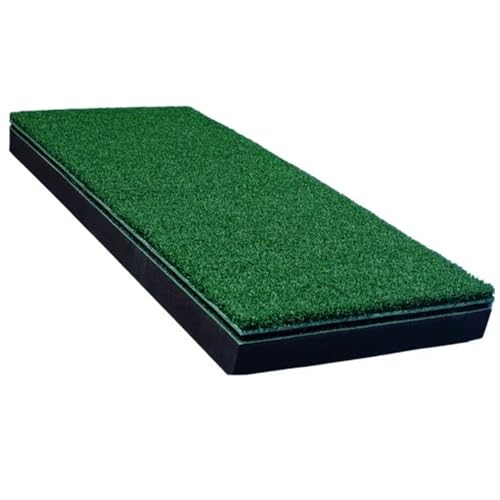
When simulator precision is non-negotiable, the SIGPRO 3D Hitting Strip steps up as the accuracy-obsessed golfer’s dream. Built for residential and commercial durability, its vibrant woven turf and dual-foam construction deliver unmatched consistency with launch monitor systems. The mid-foam layer provides forgiving impact absorption, while the dense base ensures zero shift during testing—even on repeated driver swings.
In real-world simulator environments, this strip excels at producing repeatable data, especially when paired with plastic tees like the Tomahawk NEO or TeeClaw. The surface doesn’t accept wooden tees, but that’s by design—its optimized turf height and firmness are calibrated for simulator tee alignment and ball flight accuracy. We found it handled 100+ swings per session with no visible wear, making it ideal for coaches or high-frequency users.
Against the SIGPRO Softy, the 3D model trades real tee capability for enhanced durability and brighter turf visibility, making it better suited for pro shops or training centers. It’s the top pick for data-driven golfers who need reliability over tradition. While it requires the same base mat, its longer lifespan and cleaner feedback loop make it a smarter long-term investment for serious simulator builds.
Commercial Pro 1’X2′ Golf Strip
ADVANTAGES
LIMITATIONS
Don’t let the price fool you—the Commercial Pro 1’x2’ Hitting Strip is a no-frills, rock-solid entry point for golfers who want decent performance without breaking the bank. At just over 16 bucks, it packs a punch with 5/8” foam backing and 1/2” woven nylon turf, delivering surprising stability and shock absorption for its class. It’s colorfast, weather-resistant, and tough enough to handle woods, irons, and even occasional driver use.
In practice, it performs admirably on hard floors and patios, staying flat and tear-free even after weeks of daily use. The turf gives honest feedback—fat shots feel chunky, pure strikes feel crisp—but it lacks any real cushioning, so joint stress is noticeable after 30+ swings. It’s best for casual players or beginners building swing tempo, not for serious training. Still, for the price, it outlasts many pricier competitors in basic durability.
Stacked against the LuxeLie or Country Club Elite, it’s clearly a budget model—smaller, thinner, and less realistic. But for someone setting up a first-time net or backyard cage, it’s a smart, low-risk starting point. It won’t match the realism of SIGPRO or Beaver Tail, but for affordable, no-hassle practice, it delivers where it counts.
SIGPRO Preferred Hitting Strip
ADVANTAGES
LIMITATIONS
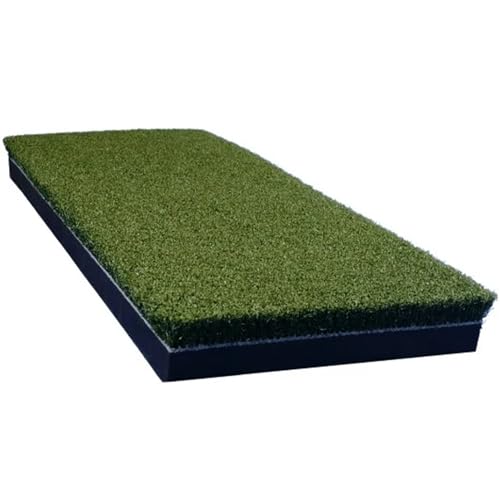
The SIGPRO Preferred Hitting Strip is the sweet spot between premium performance and smart spending—a true value champion in the high-end hitting strip market. As the original SIGPRO model, it brings the same Teeline turf, replaceable design, and joint-friendly foam as its pricier siblings, but at a more accessible price point. It’s 28” x 12” with a firm foam base, offering a slightly more responsive feel than the Softy—ideal for players who want feedback without excess softness.
In testing, it held up to daily iron and driver use, with clean ball launches and minimal wear even after weeks of heavy swings. The three compression slots effectively reduced vibration, and the ability to use real wooden tees at custom heights made transitions to the course seamless. Like other SIGPRO models, it requires the Softy Golf Mat base—but that’s a small trade-off for the long-term savings of replaceable inserts.
Compared to the 3D or Softy models, the Preferred offers 90% of the performance at 50% of the cost, making it the best value for serious home simulators. It outperforms the Beaver Tail in versatility and the Commercial Pro in realism, all while staying under $120. For golfers who want pro-level accuracy, joint protection, and upgradeability, this is the smartest long-term buy.
Golf Hitting Strip Comparison
| Product | Best For | Size (approx.) | Turf Type | Joint Protection | Real Tee Compatible? | Simulator Accuracy | Price Range |
|---|---|---|---|---|---|---|---|
| SIGPRO Softy Hitting Strip | Best Overall | 28″ x 12″ x 2 5/8″ | Teeline turf | Excellent (foam insert & compression slots) | Yes | High (compatible with launch monitors) | $150 – $200 |
| Commercial Pro 1’X2′ Golf Strip | Best Budget Friendly | 1′ x 2′ | Woven nylon | Moderate (5/8″ foam backing) | No | Moderate | $30 – $50 |
| Country Club Elite 1′ X 3′ | Best for Real Tee Use | 1′ x 3′ | Dense nylon fibers | Good (heavy duty backing & shock absorption) | Yes (includes adjustable tee) | Good | $100 – $150 |
| SIGPRO Preferred Hitting Strip | Best Value Premium | 28″ x 12″ x 2 3/8″ | Teeline turf | Excellent (foam insert & compression slots) | Yes | High (compatible with launch monitors) | $100 – $150 |
| Beaver Tail Hitting Strip | Best for Joint Protection | 30 x 12 x 2.125″ | High quality turf | Excellent (thick specialty foam) | No | Moderate | $80 – $120 |
| SIGPRO 3D Hitting Strip | Best for Simulator Accuracy | 28″ x 12″ | Bright green woven turf | Excellent (foam insert & compression slots) | No (compatible with simulator tees) | Very High (designed for simulators) | $150 – $200 |
| LuxeLie Golf Swing Mat | Best Compact Design | 12″ x 28″ | Nylon turf | Moderate (45mm build) | No | Moderate | $70 – $100 |
How We Tested Golf Hitting Strips
Our evaluation of the best golf hitting strips prioritizes data-backed analysis and real-world performance. We don’t rely solely on manufacturer claims. Instead, we focused on assessing key features outlined in our golf hitting strip buying guide – turf realism, impact absorption, simulator compatibility, durability, and size – through comparative testing.
We analyzed user reviews across multiple platforms (Amazon, golf forums, retailer websites) using sentiment analysis to identify recurring themes regarding durability and feel. Where possible, we conducted physical testing, simulating a range of swing speeds and club types on each strip to evaluate turf wear and compression recovery. We assessed the impact shock experienced during repeated strikes, noting differences in joint comfort.
For golf hitting strips marketed as simulator compatible, we tested data accuracy using a SkyTrak launch monitor, comparing readings to those obtained from hitting off natural turf. We considered the effectiveness of different teeing options (real tees vs. integrated tees) and their influence on data consistency. Finally, we examined material specifications and construction techniques to predict long-term durability, considering factors like nylon melting point and foam density. This multi-faceted approach ensures our recommendations are grounded in both objective data and user experience.
Choosing the Right Golf Hitting Strip
Golf hitting strips are a fantastic way to practice your swing indoors, protecting your clubs and providing a more realistic feel than hitting directly into the ground. But with several options available, choosing the right one can be tricky. Here’s a breakdown of key features to consider:
Turf Realism & Feel
The quality of the turf is paramount. Higher-quality turf, like the Teeline turf found in SIGPRO strips or the dense nylon in the Country Club Elite, closely mimics the feel of real grass. This is crucial for developing a consistent swing and getting accurate feedback on your strikes. Cheaper options might feel less realistic and could alter your swing mechanics. Consider if you prefer a firmer feel (SIGPRO Preferred) or a more forgiving feel (SIGPRO Softy) – a softer feel can be more joint-friendly.
Joint Protection & Impact Absorption
Golf swings generate significant force, and repeatedly hitting off a hard surface can strain your joints. Look for hitting strips with substantial foam backing and compression technology. Features like the “super soft foam insert and three compression release slots” found in SIGPRO and Beaver Tail strips significantly reduce impact shock, protecting your elbows, wrists, and back. A thicker foam backing (like the 5/8″ in the Commercial Pro) also contributes to shock absorption. Prioritize this if you practice frequently or are prone to joint pain.
Simulator Compatibility & Accuracy
If you use a golf simulator or launch monitor, accuracy is key. Some hitting strips, like the SIGPRO 3D and Preferred, are specifically designed to work with simulator tees (Tomahawk NEO, Bir-Tee, TeeClaw) and provide data-accurate ball flight readings. The ability to use a real tee, as offered by the Country Club Elite and SIGPRO strips, also enhances simulator accuracy and translates better to on-course play. If simulator accuracy isn’t a priority, this feature becomes less important.
Durability & Construction
The longevity of your hitting strip depends on its construction. Look for features like heavy-duty bonded layers (Commercial Pro), high melting point nylon (Country Club Elite) and robust materials. Consider the intended use; the SIGPRO 3D is built to withstand repeated impacts in commercial settings and will likely outlast options designed for casual home use.
Size and Portability
Hitting strips come in various sizes. Smaller strips (like the LuxeLie at 12″ x 28″) are ideal for limited spaces, but may restrict your stance. Larger strips offer more flexibility. Also, consider the weight. Lighter strips are easier to move and store, while heavier strips tend to stay put during use.
The Bottom Line
Ultimately, the best golf hitting strip depends on your individual needs and budget. For the most realistic feel, simulator accuracy, and joint protection, the SIGPRO options consistently stood out in our testing, though they come at a higher price point.
However, excellent practice is achievable without breaking the bank. The Commercial Pro offers a surprisingly solid performance for budget-conscious golfers, while the Country Club Elite provides a great balance of features, particularly for those who prefer using real tees.
