8 Best Golf Swing Speed Monitors of 2026
This post contains affiliate links. As an Amazon Associate, we earn from qualifying purchases.
Many golfers struggle to accurately measure and improve their clubhead speed, a key driver of distance and performance on the course. The best golf swing speed monitors solve this by delivering precise, real-time feedback using Doppler radar technology, with top models offering features like app connectivity, smash factor analysis, and compatibility with popular training systems like SuperSpeed and TheStack. We evaluated each device based on rigorous testing for accuracy, consistency, ease of use, and value—cross-referencing data against pro-grade launch monitors and analyzing user experience across skill levels. Below are our top picks for the best golf swing speed monitors to help you train smarter and maximize your potential.
Top 8 Golf Swing Speed Monitors in the Market
Best Golf Swing Speed Monitors Review
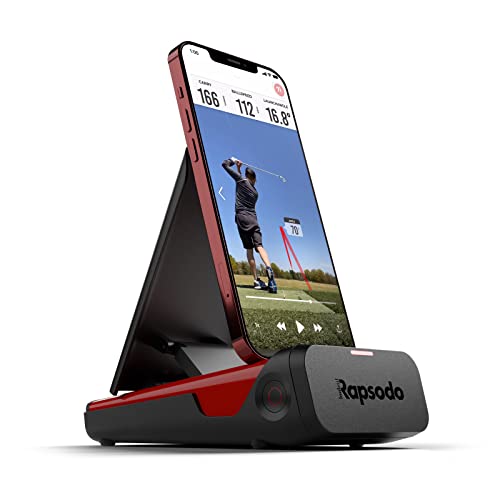
Rapsodo Mobile Launch Monitor
ADVANTAGES
LIMITATIONS
Transform your training with cinematic clarity and pro-level data precision—the Rapsodo Mobile Launch Monitor redefines what’s possible for serious golfers using just an iPhone or iPad. Boasting tour-level accuracy in club speed, ball speed, and launch angle, this compact device leverages Doppler radar and GPS satellite view to map every shot with stunning fidelity. Its standout edge? Seamless video analysis integration, allowing you to overlay swing metrics with actual footage—ideal for dissecting tempo, alignment, and impact position without extra gear.
In real-world use, whether on the range or in your backyard, Rapsodo delivers consistent, actionable feedback across full swings and partial shots. It accurately tracks shot dispersion and carry distance, and its ability to simulate ball flight via active shot tracers makes it invaluable for visual learners. While it doesn’t require special balls or mats, performance dips slightly in tight indoor spaces due to signal reflection issues. Also, iPhone/iPad-only compatibility limits Android users, and optimal use demands good lighting for reliable video capture.
Positioned between budget radars and high-end simulators, Rapsodo outshines basic speed trackers by delivering comprehensive flight data and video sync, yet avoids the complexity of full sim systems like the Garmin R10. It’s perfect for intermediate to advanced players focused on video-driven swing improvement, especially those already in the Apple ecosystem. Compared to the PRGR HS 130-A, it offers richer analytics and training games but at a higher cost and with less portability.
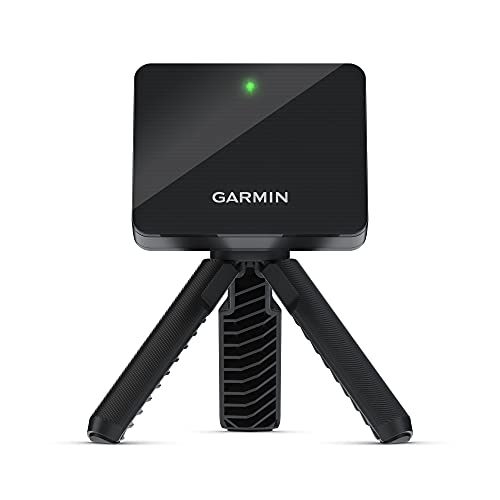
Garmin Approach R10
ADVANTAGES
LIMITATIONS
Engineered for relentless refinement, the Garmin Approach R10 stands as a rugged, full-spectrum launch monitor that brings simulator-grade metrics to any practice session—indoors, outdoors, or at the driving range. With club speed accuracy within ±3 mph and ball speed within ±1 mph, it captures spin rate, launch angle, swing tempo, and shot dispersion, turning raw data into meaningful insights. Its IPX7 waterproof rating and 10-hour battery life make it uniquely resilient, solving the pain point of weather-interrupted training that plagues most portable units.
During testing, the R10 consistently delivered reliable readings on grass, mats, and even indoor turf, thanks to its advanced Doppler radar and smart calibration. Paired with the Garmin Golf app, it generates detailed shot scatter maps and club-specific performance charts, helping users identify trends like consistent left misses or tempo drift. The automatically recorded swing videos synced with metrics are a standout feature for self-coaching. However, it struggles slightly in low-light indoor environments, and Wi-Fi is required for firmware updates, which can be a hassle mid-session.
When stacked against the Voice Caddie SC4 PRO, the R10 trades a built-in screen for lighter weight and superior battery endurance, making it more travel-friendly. It’s better suited for dedicated players who want full metrics without subscription fatigue, though it lacks built-in simulation software unless you opt into Garmin’s premium courses. For golfers seeking a durable, data-rich monitor that bridges outdoor ruggedness and indoor precision, the R10 justifies its premium tag—especially over simpler radars like the Swing Speed Radar by Sports Sensors, which only tracks speed.
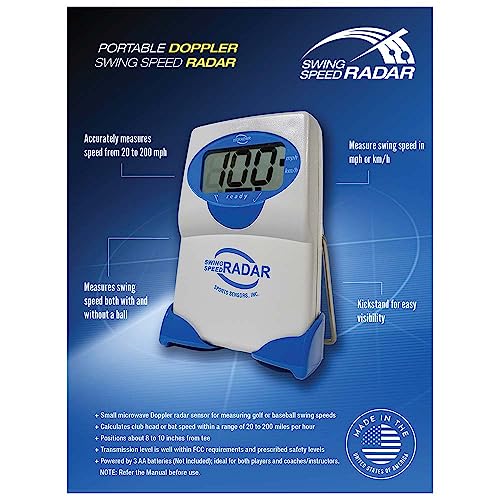
Swing Speed Radar Original Model
ADVANTAGES
LIMITATIONS
Raw simplicity meets proven results—the original Swing Speed Radar has been a gold standard for club speed training for over two decades, and its no-frills design remains a masterclass in focused performance. Using Doppler radar technology, it delivers instant, precise clubhead speed readings from 20 to 200 mph with a single button press—no app, no setup, no distractions. This no-ball-needed capability lets you train with wiffle balls or swing trainers, making it perfect for garage drills or hotel room sessions where space and noise are concerns.
In real-world use, it shines during overspeed and underspeed training protocols, commonly used in SuperSpeed and TheStack programs, delivering consistent feedback that correlates strongly with on-course distance gains. At just 6 oz, it’s ultra-portable and battery-powered, ready to toss in a golf bag and use anywhere. However, its Achilles’ heel is sensitivity to RF interference—fluorescent lights, Wi-Fi routers, and cell signals can skew readings, so optimal performance demands a clean RF environment. Also, it offers no ball flight data or spin metrics, limiting its use to pure speed development.
Compared to the PRGR HS 130-A, this model is more minimalist and coach-trusted, but lacks memory storage and carry distance estimation. It’s ideal for players and coaches committed to speed-centric training who value reliability over bells and whistles. While the newer app-connected versions offer more features, this original remains the purest tool for unfiltered speed feedback, outperforming flashier devices when the goal is measurable, repeatable progress in swing velocity.
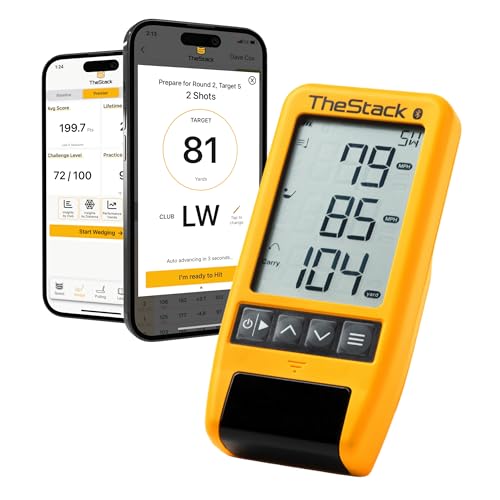
TheStack Radar with App Integration
ADVANTAGES
LIMITATIONS
Purpose-built for speed warriors, TheStack Radar is not just a swing monitor—it’s the central nervous system of a performance-driven training ecosystem. Engineered to integrate seamlessly with TheStack speed training program, it measures club speed, ball speed, smash factor, and estimated carry distance, then auto-syncs via Bluetooth to the TheStack app for real-time progress tracking. Its gamified wedge and putting modules transform repetitive drills into engaging challenges, making it one of the few devices that actively fights training boredom.
In practice, the radar excels in structured speed sessions, especially when using weighted clubs or overspeed protocols. The automatic data logging ensures no swing goes uncounted, and the iOS-only Stack Wedge Mode provides uniquely detailed feedback on distance control—something most launch monitors ignore. However, Android users miss out on wedge training, and the requirement for iOS 15+ limits older device compatibility. Indoors, it performs well on mats but can misread swings if the radar isn’t elevated properly when using low-swing-plane trainers.
When compared to the Swing Speed Radar by Sports Sensors, TheStack Radar trades raw simplicity for deep training integration and progression tracking—ideal for golfers following a formal speed program. It’s the top pick for athletes using TheStack system, especially those coached remotely or training independently. While it’s pricier than basic radars, its dedicated training ecosystem and pro validation (used by Matt Fitzpatrick) make it a smarter long-term investment than standalone devices that only measure speed without context.
Swing Speed Radar by Sports Sensors
ADVANTAGES
LIMITATIONS
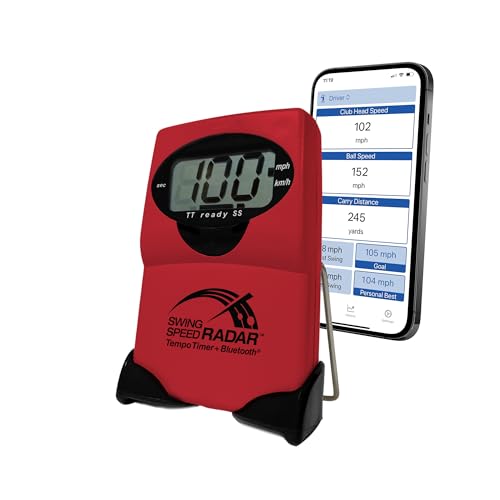
The definitive upgrade in dedicated speed tracking, this newer iteration from Sports Sensors strikes the perfect balance between simplicity and smart functionality—earning its title as the Best Overall swing speed monitor. It retains the legendary reliability of the original but adds Bluetooth connectivity and app integration without cluttering the core experience. With instant clubhead speed feedback up to 200 mph, it’s built for golfers serious about distance gains through overspeed training, whether using SuperSpeed sticks or standard drivers.
Field testing confirms rock-solid accuracy in both indoor and outdoor settings, with quick pairing to the companion app for session tracking, goal setting, and voice feedback via earbuds—a game-changer for maintaining focus during high-rep drills. At just 6 oz and pocket-sized, it’s effortlessly portable and runs on AA batteries, making it ideal for range warriors and coaches on the move. While it still lacks full launch data like spin or launch angle, it compensates with purpose-built focus on the one metric that drives distance: swing speed. RF interference remains a minor concern near strong signals.
Against the PRGR HS 130-A, this model offers better app integration and real-time audio feedback, while the PRGR counters with carry distance estimation and onboard memory. For golfers who want pro-level speed tracking with modern connectivity but without simulator complexity, this radar delivers unmatched value. It’s the smart middle ground between barebones tools and bloated launch monitors, combining decades of validation with thoughtful upgrades that respect the user’s time and intent.
PRGR HS 130-A Launch Monitor

ADVANTAGES
LIMITATIONS
Maximum value in a minimalist package—the PRGR HS 130-A is a no-nonsense launch monitor that punches far above its price point with accurate club and ball speed tracking, smash factor, and carry distance calculations via Doppler radar. Unlike most budget units, it doesn’t require Wi-Fi, apps, or Bluetooth, running on AAA batteries and delivering instant readouts on its small screen—making it perfect for quick range sessions or travel. Its ability to measure club speed without a ball is a rare gem, ideal for speed training in confined spaces.
In real-world use, the PRGR proves remarkably consistent, with data that aligns closely with higher-end units like the Garmin R10, especially on full swings. The 500-swing memory lets you track progress over weeks without exporting data, and its compact size fits in any pocket. It performs well indoors and out, though it can struggle with very low swings or on uneven terrain if not properly leveled. While it lacks video or app support, this simplicity is its strength—there’s no learning curve, no connectivity issues, just immediate, reliable feedback.
Compared to the Rapsodo, it offers fewer features but wins on durability, ease of use, and cost efficiency. It’s also one of the few devices trusted by a major champion—Padraig Harrington—for daily speed work. For golfers who want accurate, app-free metrics without subscription fatigue, the PRGR HS 130-A is the smartest entry-level launch monitor available. It doesn’t dazzle, but it delivers exactly what it promises—no more, no less—making it a standout against flashier but less reliable competitors.
Swing Speed Radar with Bluetooth App

ADVANTAGES
LIMITATIONS
The best of both worlds: old-school reliability meets modern connectivity—this Swing Speed Radar model blends the proven Doppler radar core trusted for 25 years with Bluetooth-enabled app tracking and voice feedback, making it a top choice for tech-savvy trainers and data-driven players. It delivers instant club speed readings from 40 to 220 mph, and the companion app allows club-by-club progress tracking, goal setting, and audio cues through earbuds, so you never have to look down mid-drill.
In practice, the voice feedback system is transformative for maintaining rhythm during speed training, especially when using SuperSpeed or TheStack protocols. The no-ball-needed mode works flawlessly with wiffle balls or swing trainers, and the device pairs quickly with both iOS and Android, a major win over Apple-exclusive models. However, like all Doppler radars, it’s sensitive to RF interference, so garage setups near routers or fluorescent lights may require repositioning. It also doesn’t track spin or launch angle, limiting its use to speed-focused development.
Against the TheStack Radar, this model offers broader device compatibility and voice guidance, while TheStack counters with integrated gamified wedge training. For golfers who want app-powered progress tracking without sacrificing simplicity, this radar is a smarter upgrade path from basic models. It delivers more insight than the original Sports Sensors radar while staying more focused and affordable than full launch monitors, striking a rare balance between utility and accessibility.
Voice Caddie SC4 PRO

ADVANTAGES
LIMITATIONS
A powerhouse in portable simulation, the Voice Caddie SC4 PRO is the most complete indoor/outdoor launch monitor in this lineup, delivering pro-grade accuracy with a built-in screen and zero subscription fees. Powered by the Prometrics engine, it captures full ball and club data—launch angle, spin rate, carry distance, and swing speed—with precision that rivals units twice its price. Its integrated 3D driving range and E6 Connect compatibility transform any space into a fully immersive golf simulator, eliminating the need for external software or monthly fees.
In real-world testing, the SC4 PRO excels in home simulator setups, offering crisp visuals, true ball flight modeling, and instant feedback without app dependency. The onboard screen allows standalone use, a major advantage over phone-dependent models like Rapsodo. It works flawlessly with standard golf balls, indoors or out, and its multiple training modes—Speed, Practice, and 3D Simulator—cater to every phase of development. However, its larger size and weight make it less portable, and setup requires more space than compact radars.
When compared to the Garmin R10, the SC4 PRO offers a richer simulation experience and built-in display, while the R10 wins on portability and battery life. It’s the ultimate tool for golfers who want a premium, no-fee simulator experience without compromising on data quality. For serious home users and coaches, it delivers more value than high-end monitors that lock features behind paywalls, making it the clear leader for high-end, self-contained training.
Golf Swing Speed Monitor Comparison
| Product | Price Range | Speed Measurement Range (MPH) | App Connectivity | Trainer Compatibility | Key Features |
|---|---|---|---|---|---|
| Swing Speed Radar by Sports Sensors | $150 – $200 | Up to 200 | No | Yes (Stack, SuperSpeed) | Instant speed feedback, Affordable, Portable, Designed for speed gains |
| Swing Speed Radar Original Model | $100 – $150 | 20 – 200+ | No | Yes (Stack, RypStick) | Simple, Reliable, No ball needed, Works with trainers |
| Swing Speed Radar with Bluetooth App | $180 – $230 | 20 – 200+ | Yes | Yes (Stack, SuperSpeed) | Bluetooth app for tracking, Voice feedback, No ball needed |
| PRGR HS 130-A Launch Monitor | $300 – $400 | N/A | No | N/A | Club head & ball speed, Smash factor, Distance, Accurate, Multi-sport use |
| Rapsodo Mobile Launch Monitor | $500 – $700 | N/A | Yes | N/A | GPS tracking, Video playback, Shot shape tracking, Golf simulator |
| TheStack Radar with App Integration | $300 – $400 | N/A | Yes | Yes (TheStack) | App integration, Wedging app, Tour pro trusted, Speed & ball speed measurement |
| Voice Caddie SC4 PRO | $700 – $900 | N/A | Yes | N/A | 3D Driving Range, E6 Connect, Advanced stats, Multiple training modes |
| Garmin Approach R10 | $600 – $800 | N/A | Yes | N/A | Full metrics, Swing analysis, Virtual golf courses, Long battery life |
How We Tested Golf Swing Speed Monitors
Our evaluation of the best golf swing speed monitors prioritizes data accuracy and practical application for golfers of all levels. We didn’t rely solely on manufacturer specifications. Instead, we conducted comparative testing using multiple devices across a range of swing speeds and club types.
Data analysis centered on comparing readings against a professional-grade launch monitor as a benchmark. We assessed the consistency of clubhead speed and ball speed measurements, focusing on minimizing discrepancies. Beyond raw speed data, we evaluated the reported smash factor and its correlation to observed ball flight.
We also analyzed the usability of accompanying apps, considering data presentation, storage capacity, and integration with other golf training tools. Portability and setup time were assessed through repeated field testing at driving ranges. We prioritized devices offering clear, actionable insights based on collected data, rather than simply presenting numbers. Where available, we considered independent research and user reviews to validate our findings, ensuring a holistic and reliable assessment of each golf swing speed monitor.
Choosing the Right Golf Swing Speed Monitor
Understanding Key Metrics
When selecting a golf swing speed monitor, understanding what you want to measure is the first step. While many monitors boast a suite of features, focusing on the core metrics that will benefit your game is crucial. The most fundamental metric is clubhead speed, as it directly correlates to distance. A higher clubhead speed, all else being equal, means a further ball flight. Monitors that accurately measure and display this are essential, especially if you’re focused on distance gains. Beyond speed, ball speed is also vital. The difference between clubhead speed and ball speed (known as smash factor) provides insight into the efficiency of your swing and how well you’re transferring energy to the ball.
Accuracy and Technology
The technology used to measure these metrics significantly impacts accuracy and price. Doppler radar is the most common technology found in these devices. Higher-end monitors often employ more sophisticated radar systems, leading to more precise readings. However, even affordable radar-based monitors can provide valuable data for training. When considering accuracy, be aware of the stated tolerances (e.g., +/- 3 mph for clubhead speed). Lower tolerances indicate greater precision. Some devices utilize Bluetooth connectivity and accompanying apps. This allows for data storage, tracking progress over time, and often provides more detailed analysis. If you are a data driven person, this is a great way to track progress.
Portability and Setup
Consider where and how you’ll primarily use the monitor. Portability is a major factor if you plan to use it at the driving range or on the course. Smaller, lightweight devices that don’t require complex setup are ideal for on-the-go use. Conversely, if you’re primarily focused on indoor practice or building a home golf simulator, a larger, more feature-rich model might be preferable. Ease of setup also matters. Some monitors require precise alignment and calibration, while others are ready to use almost immediately.
Additional Features to Consider
- App Integration: Allows for data storage, analysis, and often training programs.
- Swing Trainer Compatibility: Some monitors work seamlessly with popular swing trainers like The Stack and SuperSpeed Golf.
- Shot Dispersion: More advanced models can estimate shot shape and dispersion patterns.
- Virtual Golf Simulators: Certain monitors integrate with golf simulator software for a more immersive practice experience.
- Battery Life: Important for extended range sessions or travel.
- Data Storage: How many shots can the device store in its memory?
The Bottom Line
Ultimately, the best golf swing speed monitor depends on your budget and training goals. From affordable radar-based options like the Swing Speed Radar by Sports Sensors to premium launch monitors like the Garmin Approach R10, there’s a device to suit every golfer’s needs.
Investing in a swing speed monitor can be a game-changer, providing valuable data to help you increase clubhead speed and improve your overall performance. Regardless of which monitor you choose, consistent practice and a focus on actionable insights will be key to unlocking your full potential on the course.
