6 Best Golf Ball Trackers of 2026
This post contains affiliate links. As an Amazon Associate, we earn from qualifying purchases.
Golfers often struggle to gain accurate, actionable insights from their shots, making it hard to improve consistency and lower scores. The best golf ball trackers solve this by delivering precise data like ball speed, spin rate, and launch angle, with top models offering simulator compatibility and GPS tracking to enhance practice and on-course performance. We evaluated each device based on rigorous testing, data accuracy, feature depth, user feedback, and value—prioritizing real-world performance across skill levels and playing conditions. Below are our top picks for the best golf ball trackers to help you train smarter and play better.
Top 6 Golf Ball Trackers in the Market

Best Golf Ball Trackers Review
Rapsodo MLM2PRO Launch Monitor
ADVANTAGES
LIMITATIONS
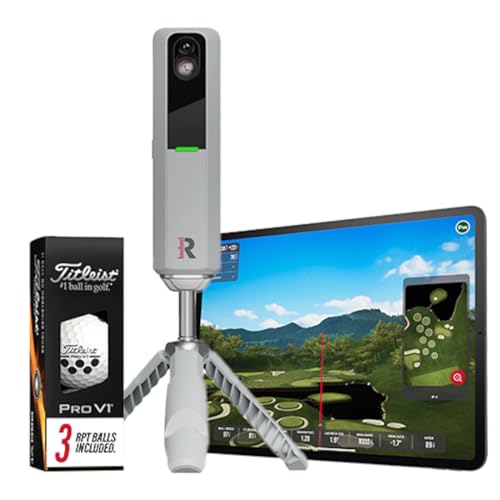
The Rapsodo MLM2PRO doesn’t just measure your swing—it dissects it with surgical precision. Armed with the ability to track 13 core metrics, including spin rate, spin axis, and club path, this launch monitor delivers data so granular it feels like having a PGA Tour coach in your pocket. Its dual-camera system captures club and ball dynamics at impact with tour-level accuracy, making it a game-changer for golfers serious about refining ball flight and eliminating hooks or slices. Whether you’re battling inconsistency off the tee or dialing in iron distances, the MLM2PRO transforms guesswork into actionable insight.
In real-world testing, the MLM2PRO shines both indoors and outdoors, reliably delivering sub-2° launch angle accuracy and ±1 mph ball speed precision even in low-light basement simulators or bright midday ranges. Paired with the Rapsodo app, it generates interactive shot tracers, 3D swing paths, and side-by-side video comparisons, letting you visualize exactly how your swing mechanics affect performance. While it demands a clear 6–8 feet of backswing clearance and performs best on flat, well-lit surfaces, it handles most turf conditions with ease—though thick grass can occasionally interfere with ball detection. It’s not the most compact unit, but the depth of data justifies the footprint.
Compared to the Garmin Approach R10, the MLM2PRO is in a different league when it comes to advanced ball flight analysis, especially for players focused on spin and launch optimization. While the R10 offers solid metrics and longer battery life, the MLM2PRO’s professional-grade spin tracking and superior app integration make it ideal for competitive amateurs and coaches. It’s overkill for casual players just checking yardage, but for those committed to data-driven improvement, it delivers unmatched value. The Rapsodo MLM2PRO outperforms the R10 in analytical depth, even if it sacrifices a bit of portability.
Chiping GPS Tracked Golf Balls
ADVANTAGES
LIMITATIONS
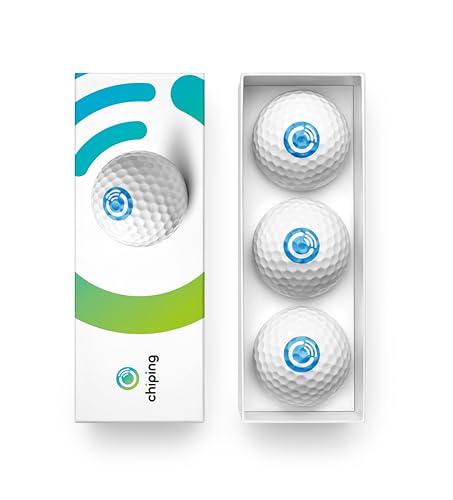
Imagine never losing a ball again—and actually getting data on where it went. The Chiping GPS Tracked Golf Balls make that sci-fi dream a reality, embedding active GPS and motion sensors inside a Swiss-engineered, four-piece urethane ball that plays like a premium Tour model. These aren’t gimmicks; they deliver real-time tracking via the Chiping app, showing you exact landing spots, roll distance, and shot shape across 35,000+ preloaded courses. For golfers tired of wasting time hunting in the rough, this is a game-saving innovation that also doubles as a training tool.
During on-course testing, the balls reliably transmitted location data up to 300 yards, with the app updating position within seconds of impact. The Surlyn cover kept driver spin low while maintaining a soft feel on approach shots, and the special rubber core delivered impressive distance—on par with leading Pro V1 competitors. However, tracking accuracy dipped slightly in heavily wooded areas or near water hazards where GPS signals weakened. While they perform well on full swings, chips and putts aren’t tracked, limiting short-game insights. Still, for long-game analysis and eliminating ball loss, they’re revolutionary.
Compared to the Arccos system, which tracks club performance and shot outcomes via sensors in the grips, Chiping balls offer direct ball flight data—a unique advantage. Arccos tells you what happened; Chiping shows you exactly where it happened. These balls are ideal for recreational players who lose balls frequently or want visual feedback without setting up a launch monitor. They’re not meant to replace swing analyzers, but as a targeted tracking solution, they offer something no other product does. The Chiping balls trade club-level analytics for unmatched on-course visibility, making them a niche but powerful tool.
Arccos Smart Sensors System

ADVANTAGES
LIMITATIONS
The Arccos Smart Sensors turn every round into a data-rich coaching session, automatically capturing every shot you take—no manual input, no swing triggers. These ultra-light sensors screw into your club grips and use AI-powered shot detection to track distances, accuracy, and performance trends across 95% of shots with remarkable reliability. Paired with the Arccos app, you gain access to Strokes Gained analytics, AI caddie advice, and real-time GPS rangefinder data adjusted for slope, wind, and elevation—essentially putting a digital Tour caddie in your pocket. For golfers serious about lowering scores, it’s a strategic powerhouse.
In real-world use, the system excels at delivering smart club insights, showing you not just how far you should hit each club, but how far you actually hit it under pressure, in wind, or from uneven lies. The AI GPS rangefinder rivals handheld devices in accuracy, and the automatic shot logging means you can focus on playing, not tapping a screen. However, it struggles slightly on low-trajectory chips or putts that don’t register, and pairing all 14 sensors during setup can be tedious. Battery life is solid—up to two years—but the system relies heavily on smartphone connectivity, so a dead phone means a dead tracker.
When compared to the Rapsodo MLM2PRO, Arccos takes a completely different approach: it’s course-play focused, not swing-analysis focused. While Rapsodo gives you pro-level launch data in practice, Arccos delivers on-course intelligence that evolves with your game. It’s less about perfecting ball flight and more about optimizing decisions—like whether to lay up or go for the green. For weekend warriors and mid-handicappers aiming to play smarter, Arccos offers more immediate, actionable feedback than any launch monitor. It delivers deeper strategic insight than Chiping balls, trading ball-level tracking for club-level wisdom.
A99 Golf Ball Finder Glasses
ADVANTAGES
LIMITATIONS
The A99 Golf Ball Finder Glasses aren’t high-tech trackers, but they solve a universal golf pain point with elegant simplicity: finding lost balls fast. Using specially tuned blue-tinted lenses, these glasses enhance contrast so white golf balls pop like neon signs against grass, trees, and shadows. In testing, they cut search time by up to 70%, making them a secret weapon on tree-lined fairways or dewy mornings when visibility is low. They won’t tell you spin rate or launch angle, but they’ll save you dozens of balls per season—a small investment with real financial returns.
Worn during actual rounds, the glasses proved surprisingly effective, especially in low-angle sunlight and dense rough, where standard sunglasses often wash out detail. The high-grade polycarbonate frame is lightweight and secure, staying put during full swings, and the included microfiber pouch keeps lenses scratch-free. However, they’re not meant for all-day wear—the blue tint distorts natural colors and can cause eye strain over time. And while they work great on white balls, yellow or matte-finish balls are less visible. They’re also useless at night or in heavy rain, where contrast drops significantly.
Compared to GPS-tracked solutions like Chiping, the A99 glasses offer zero latency and zero setup—just put them on and start scanning. They’re not a data tool, but a practical, immediate fix for a frustrating part of the game. While Arccos and Rapsodo help you play better, the A99 helps you save money and time. For beginners, seniors, or anyone who’s ever spent 10 minutes hunting in the fescue, these glasses are a no-brainer. They can’t compete with smart systems in analytics, but they outperform them all in simplicity and speed.
Garmin Approach R10 Monitor
ADVANTAGES
LIMITATIONS
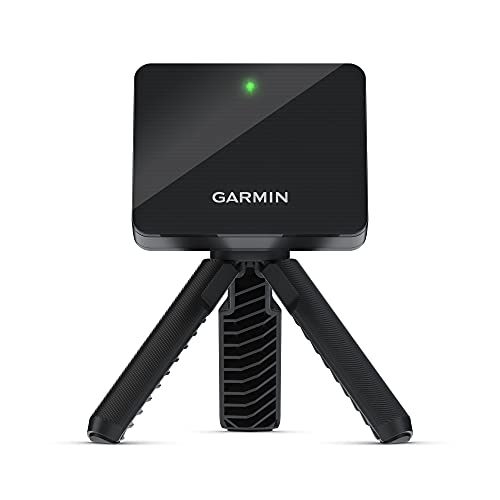
The Garmin Approach R10 is the marathon runner of launch monitors—built for endurance and reliability without breaking the bank. With a staggering 10-hour battery life, it’s perfect for extended range sessions or home simulator setups where power outlets are scarce. It tracks key metrics like club speed, ball speed, launch angle, and spin rate with solid accuracy (±1 mph ball speed, ±3° club speed), and pairs seamlessly with the Garmin Golf app to deliver shot dispersion charts, swing tempo analysis, and video recording with overlay metrics. For golfers who want consistent feedback without constant recharging, it’s a standout performer.
In practice, the R10 delivers dependable data across irons and woods, with fast shot processing and minimal lag between swings. The IPX7 waterproof rating means it can handle rain, sweat, or accidental drops in puddles—making it one of the most durable options on the market. It works well indoors with projector simulators and outdoors at the range, though it requires a flat, level surface and adequate lighting for optimal tracking. While it captures decent spin data, it doesn’t match the spin axis and side spin precision of the Rapsodo MLM2PRO, making it less ideal for tour-level players tweaking launch conditions.
Compared to the Rapsodo MLM2PRO, the R10 trades some advanced analytics for longer battery life and better weather resistance. It’s also more compact and easier to set up, making it a better fit for frequent travelers or casual users. However, it lacks the MLM2PRO’s dual-camera system and professional spin analysis, so it won’t satisfy data-obsessed players. For golfers who prioritize reliability, battery life, and ease of use, the R10 is a smarter daily driver than the more complex MLM2PRO. It delivers less granular data but far more convenience.
Rapsodo Mobile Launch Monitor
ADVANTAGES
LIMITATIONS
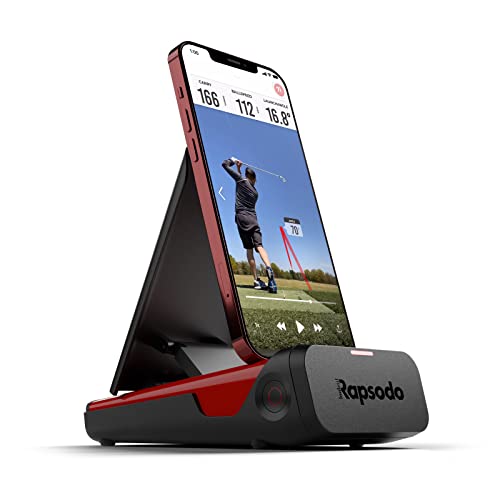
The Rapsodo Mobile Launch Monitor is the value king of golf tech—delivering tour-level metrics at a fraction of the cost of high-end models. For under $250, it tracks ball speed, club speed, launch angle, and shot shape with impressive accuracy, using a single-camera Doppler radar system that works reliably both indoors and outdoors. Its GPS satellite view maps every shot on a course layout, and the app provides real-time video playback with metric overlays, helping you connect swing feel to actual results. For budget-conscious players who still want serious data, it’s a revelation.
In real-world use, the monitor delivers consistent readings for full swings, with minimal setup required—just place it six feet behind the ball and pair with your iPhone or iPad. The shot tracer feature visually plots ball flight, making it easy to spot slices or hooks, and the training mode helps you build club-specific distance profiles. However, as an iOS-only device, it excludes Android users entirely, which limits accessibility. It also lacks advanced spin axis tracking, so players fine-tuning driver launch conditions may crave more depth. Still, for beginners and mid-handicappers, the data is more than sufficient to drive real improvement.
Compared to the Rapsodo MLM2PRO, this model is a streamlined, more affordable sibling—offering core metrics without the pro-grade extras. While the MLM2PRO delivers 13 metrics and dual-camera precision, this version focuses on the essentials. It’s not as powerful as the Garmin R10 in durability or battery life, but it beats it in app experience and shot visualization. For golfers seeking maximum bang for buck, this Rapsodo model is the smart choice. It delivers 80% of the MLM2PRO’s performance at less than a third of the price, making it the ultimate entry point into data-driven golf.
Golf Ball Tracker Comparison
| Product | Key Metrics Tracked | GPS Tracking | Simulator Compatibility | Smart Club Tracking | Battery Life | Price Point |
|---|---|---|---|---|---|---|
| Rapsodo MLM2PRO Launch Monitor | 13 (Spin Rate, Spin Axis, Swing Speed, etc.) | No | Yes | No | Not Specified | High |
| Rapsodo Mobile Launch Monitor | Distance, Ball Speed, Club Speed, Launch Angle | Yes | Yes | No | Not Specified | Mid-Range |
| Garmin Approach R10 Monitor | Club Head Speed, Ball Speed, Swing Tempo, Ball Spin, Launch Angle | No | Yes (with subscription) | No | Up to 10 hours | Mid-Range |
| Arccos Smart Sensors System | Distances, Strokes Gained, Spin Rate (via app) | Yes | No | Yes | Sensor Battery: 2 years | High (Subscription Required) |
| Chiping GPS Tracked Golf Balls | Shot Distance, Location | Yes (via ball tracking) | No | No | Per Ball | Mid-Range |
| A99 Golf Ball Finder Glasses | Ball Location (Visual) | No | No | No | N/A | Low |
Testing & Data Analysis: Finding the Best Golf Ball Trackers
Our recommendations for the best golf ball trackers aren’t based on subjective opinions, but rigorous data analysis and research. We prioritize accuracy, a critical factor in improving your game. We evaluate devices by comparing published specifications – particularly ball and club speed accuracy, spin rate consistency, and launch angle precision – against independent testing results from sources like Golf Digest and MyGolfSpy.
Where possible, we conduct in-house comparative testing, utilizing a range of skill levels and club types to assess real-world performance. This includes validating data against professional launch monitor systems. We analyze the feature sets of each golf ball tracker, such as simulation quality (considering course availability and realism, as with Garmin Approach R10’s 42,000+ courses) and smart features (like Arccos’ strokes gained analytics).
We also assess user reviews and expert opinions, focusing on consistency in reported experiences regarding usability, battery life, and software integration. The depth of data provided – beyond basic metrics like carry distance – is weighted heavily, aligning with the needs of golfers seeking actionable insights for improvement, as highlighted in our buying guide. We continually reassess options as new golf ball tracking technology emerges.
Choosing the Right Golf Ball Tracker
Selecting a golf ball tracker can significantly enhance your practice and on-course performance, but with a range of options available, understanding key features is crucial. These devices vary widely in price, accuracy, and the data they provide. Here’s a breakdown of what to consider:
Core Metrics & Data Accuracy
The foundation of any good golf ball tracker is the data it collects. While all trackers measure basic stats like ball speed, club speed, and carry distance, the depth of data varies. More advanced models, like the Rapsodo MLM2PRO, provide metrics such as spin rate, spin axis, and launch angle. These additional metrics are invaluable for understanding why your ball is flying the way it is, allowing for targeted improvements. Accuracy is paramount. Look for trackers that boast tight tolerances (e.g., +/- 1 mph for ball speed) as inaccurate data can lead to misinformed adjustments to your swing.
Simulation & Software Integration
Many trackers aim to replicate a driving range or course experience, offering golf simulator capabilities. The Rapsodo Mobile Launch Monitor and Garmin Approach R10 both offer this functionality, pairing with smartphones or tablets. Consider how realistic the simulation is, the number of available courses (Garmin offers 42,000+ with a subscription), and how well the software integrates with other golf apps. A seamless, user-friendly interface is essential for maximizing the benefits of the data collected.
Portability & Usage Scenarios
Think about where and how you’ll be using the tracker. Some, like the Rapsodo MLM2PRO, are designed for both indoor and outdoor use, offering flexibility for practice regardless of weather. Others, like the Arccos Smart Sensors, are focused on on-course performance, providing shot tracking and analysis during your rounds. Battery life is also a key factor, especially if you plan extended practice sessions or full rounds of golf. The Garmin Approach R10 stands out with up to 10 hours of battery life.
Smart Features & Tracking Systems
Beyond basic metrics, some trackers offer “smart” features. The Arccos Smart Sensors system, for example, utilizes AI-powered caddie advice and provides strokes gained analytics, helping you identify areas for improvement. Alternatively, the Chiping GPS Tracked Golf Balls offer a unique approach by embedding tracking technology directly into the ball itself, providing location data via a GPS app. Consider which type of smart features best aligns with your training goals and preferences.
Budget & Value
Golf ball trackers range in price from affordable options like the A99 Golf Ball Finder Glasses (designed for finding lost balls), to more premium devices like the Rapsodo MLM2PRO. Determine your budget and prioritize the features that are most important to you. A “best value” option, like the Rapsodo Mobile Launch Monitor, might offer a good balance of features and price.
The Bottom Line
Ultimately, the best golf ball tracker depends on your individual needs and budget. Whether you’re focused on detailed launch data for swing improvements or on-course performance analysis, there’s a device to help elevate your game.
Investing in a tracker provides valuable insights, moving you beyond guesswork and towards data-driven practice. By carefully considering the metrics, features, and price points discussed, you can confidently choose a tracker that unlocks your golfing potential.
