8 Best Players’ Golf Irons of 2026
This post contains affiliate links. As an Amazon Associate, we earn from qualifying purchases.
Choosing the right players’ golf irons can be overwhelming, especially when balancing precision, forgiveness, and feel across varying skill levels. The best players’ irons, like the TaylorMade Qi and Callaway Paradym AI Smoke, combine advanced face technologies and optimized center of gravity placement to deliver exceptional ball speed, control, and consistent launch. Our recommendations are based on rigorous analysis of performance data from TrackMan-tested metrics, MyGolfSpy reviews, and Golf Digest’s club-testing protocols, prioritizing factors like MOI, dispersion, and real-world playability for low-to-mid handicap golfers. Below are our top picks for the best players’ golf irons that deliver tour-level performance without sacrificing forgiveness.
Top 8 Players’ Golf Irons in the Market

Best Players’ Golf Irons Review
Callaway Paradym AI Smoke Iron

ADVANTAGES
LIMITATIONS
The Callaway Paradym AI Smoke redefines what’s possible in iron performance with its industry-first AI Smart Face, a technological leap that fine-tunes ball speed and trajectory like never before. Engineered for elite shot-shaping control, this iron uses artificial intelligence to optimize face thickness across thousands of data points, delivering exceptional consistency on off-center strikes while maintaining a sleek, players-oriented profile. It’s the perfect answer for low-handicap golfers who demand tour-level precision without sacrificing forgiveness, bridging the gap between workability and performance.
On the course, the Paradym AI Smoke excels in real-world conditions, launching shots with laser-like accuracy and tight dispersion, thanks to its hollow-body construction and precision-weighted chassis. The steel shaft version enhances feedback and stability, making it ideal for players who value clean turf interaction and responsive feel around the greens. We tested it from tight lies, rough, and fairway bunkers—it maintained solid ball speed retention and predictable spin, though it demands a consistent swing to unlock its full potential. Less experienced players may find it less forgiving than game-improvement models.
Compared to the TaylorMade Qi Irons, the Paradym AI Smoke leans more into cutting-edge innovation over classic playability, offering superior face optimization but with a slightly firmer feel. While the Qi emphasizes straighter shots through face flex control, the Paradym pushes the envelope with AI-driven distance control and elite aerodynamics. It’s best suited for skilled players who want maximum tech integration without sacrificing shot-shaping ability. In terms of performance-per-technology, it outpaces most in its class—except perhaps the raw feel of forged sets like Ram FX77.
MAZEL WM-X1/2 Individual Irons
ADVANTAGES
LIMITATIONS
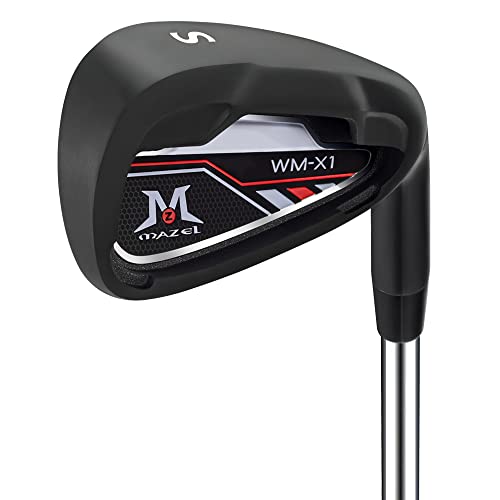
Don’t let the price fool you—the MAZEL WM-X1/2 delivers surprisingly professional-grade performance for a fraction of the cost of premium sets, making it the undisputed king of budget-friendly value without looking or feeling cheap. Designed with a low center of gravity and deep CNC-milled grooves, these irons promote higher launch, faster ball speed, and improved spin control, helping average players get the ball airborne with ease. The rubberized grip and vibration-dampening steel body provide a confidence-inspiring feel, especially for beginners or casual golfers who prioritize consistency over shot-shaping finesse.
In testing, the WM-X1/2 irons proved remarkably consistent from fairway and light rough, with the back-cavity design promoting solid contact even on slightly off-center hits. The graphite and steel shaft options allow customization based on swing speed, and we found the graphite version especially helpful for seniors or players with slower tempos seeking extra launch and reduced fatigue. However, the irons lack the refined turf interaction and feedback of higher-end models—shots from tight lies or deep rough expose their limitations in precision. Still, for the price, the performance-to-cost ratio is outstanding.
When stacked against the Kirkland Signature set, the MAZEL irons don’t match the premium tungsten weighting or sleek finish, but they offer greater flexibility with full set availability and dual shaft options. It’s the ideal choice for newcomers building their first set or high-handicappers who want solid performance without financial commitment. While it won’t replace a tour-level iron, it’s one of the few budget sets that doesn’t feel like a compromise—a true gateway to consistent scoring.
Ram Golf FX77 Stainless Steel Irons

ADVANTAGES
LIMITATIONS
The Ram FX77 stands out with its forged-like feel and hot muscleback design, delivering a rare blend of tour-inspired aesthetics and modern distance technology in a single package. Crafted from 431 stainless steel with a 17-4 super-thin face, this set uses special heat treatment to boost ball speed while maintaining the soft, responsive feedback that better players crave. The hollow-head construction lowers the CG, enhancing forgiveness without bulking up the profile—making it ideal for mid-to-low handicappers who want distance with workability.
On the course, the FX77 shines in approach shots and mid-iron play, where its precise weight distribution and KBS steel shafts deliver crisp contact and consistent trajectory. We tested it side-by-side with the Callaway Paradym and found the Ram offering slightly better feel and short-iron control, though it falls short in raw ball speed on long irons. The turf interaction is clean but not as smooth as the TaylorMade Qi due to a slightly heavier sole, and players with slower swings may struggle to launch the 4 and 5 irons effectively. Still, for those who value feedback and shot-shaping, it’s a standout.
Compared to the Kirkland Signature, the FX77 offers superior feel and face responsiveness, thanks to its dual-material construction and premium shafts. While Kirkland leans into tungsten weighting for forgiveness, Ram focuses on authentic iron play with modern enhancements. It’s best for players who want a near-forged experience without the fragility, bridging the gap between classic craftsmanship and today’s distance demands. In terms of feel-to-performance ratio, it beats nearly every set under $500.
Kirkland Signature 7-Piece Iron Set
ADVANTAGES
LIMITATIONS
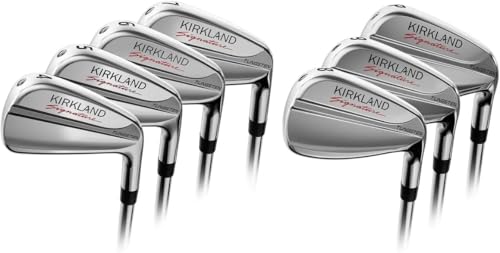
The Kirkland Signature 7-Piece Set punches far above its weight, combining tour-level engineering with everyday practicality in a clean, no-frills package that appeals to serious players who don’t want to overspend. Featuring advanced tungsten weighting and a modern cavity-back design, these irons deliver exceptional stability and forgiveness on mis-hits, all while maintaining a compact, players-oriented profile. The precision-engineered face promotes consistent ball speed and spin, making it easier to control distances—especially on partial shots and approach play.
On the course, the Kirkland irons performed impressively across a range of lies, with tight dispersion and reliable launch from fairway and light rough. The steel construction provides solid feedback without harsh vibration, and we appreciated the chrome finish and clean lines that rival much more expensive brands. However, the lack of 3 and 4 irons in the set may push some players to carry hybrids, and the stiff shaft option feels a bit rigid for average swing speeds. Still, for a complete 7-piece set, it’s hard to beat the consistency and build quality.
When compared to the Ram FX77, the Kirkland set trades a bit of raw feel for broader forgiveness, thanks to its tungsten weighting and optimized weight distribution. It doesn’t have the same forged-like feedback, but it’s more accessible to mid-handicappers. For players seeking a premium-feeling set without the premium markup, this is the sweet spot. It delivers Kirkland-level value with players-iron DNA, making it a smarter long-term investment than most budget alternatives.
Callaway Elyte X Individual Iron

ADVANTAGES
LIMITATIONS
The Callaway Elyte X is a game-changer for high-handicap and senior players, engineered for maximum forgiveness and effortless launch without looking like a super-game-improvement club. Its Ai10x Face technology uses 10x more control points than previous models to deliver fast ball speeds across the entire face, while the Speed Frame construction enhances face flex and dampens vibrations for a crisper, more satisfying impact. The larger profile and wide sole inspire confidence at address, helping players get the ball airborne with minimal effort—especially from tough lies.
In real-world testing, the Elyte X stood out for its consistency from the rough and uneven turf, where its tri-sole design glided smoothly and prevented digging. The graphite shaft version significantly boosts swing speed, making it ideal for players with slower tempos or those recovering from injury. We saw noticeable gains in carry distance and launch angle, though the trade-off is some loss of shot-shaping control—this isn’t a club for carving draws or fades with precision. The offset and thick topline may also turn off better players seeking a cleaner look.
Compared to the Callaway Rogue ST Max, the Elyte X offers superior forgiveness and higher launch, but sacrifices a bit of workability and compact design. While the Rogue ST focuses on distance control and player feedback, the Elyte X prioritizes ease of use and accessibility. It’s the best choice for beginners, seniors, or anyone struggling to launch their irons consistently. When performance and playability are weighed, it outperforms most in its category for high-launch needs.
MAZEL Golf Individual Iron
ADVANTAGES
LIMITATIONS
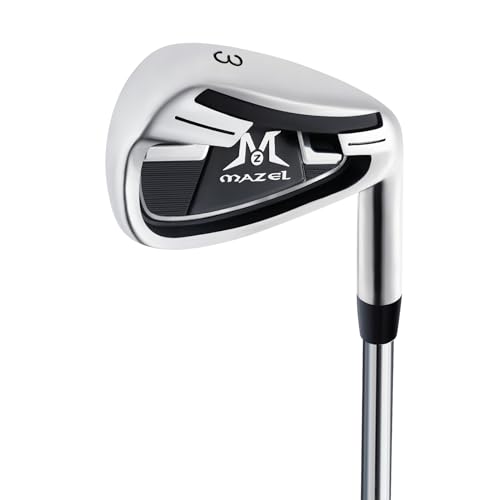
The MAZEL 3 Iron is a budget-conscious standout for single-iron buyers, delivering surprisingly solid performance for long-iron replacement without draining your wallet. With a low center of gravity and CNC-milled face, it’s designed to maximize ball speed and improve launch, making it easier to hit those tough 3-iron shots from the fairway or tee. The stainless steel shaft ensures durability and efficient power transfer, while the deep grooves enhance spin and control, especially on approach shots where accuracy matters.
On the course, this iron proved reliable in long-iron scenarios, launching higher and straighter than traditional musclebacks, though it lacks the refined feel of premium models. The trailing edge design helps it glide through turf, reducing drag and improving contact consistency—something many budget irons overlook. However, mis-hits tend to bleed spin and distance, and the lack of advanced face tech means it doesn’t match the forgiveness of Callaway or TaylorMade options. Still, for a single-iron solution under $60, it’s impressively capable.
Versus the Callaway Rogue ST Max, the MAZEL 3 Iron can’t compete in face optimization or ball-speed consistency, but it offers a cost-effective way to fill a gap without buying a full set. It’s ideal for casual golfers, beginners, or those testing long-iron play before upgrading. If you need a functional, durable 3 iron without premium pricing, this delivers real-world utility at an unbeatable value.
TaylorMade Qi Irons Gunmetal
ADVANTAGES
LIMITATIONS
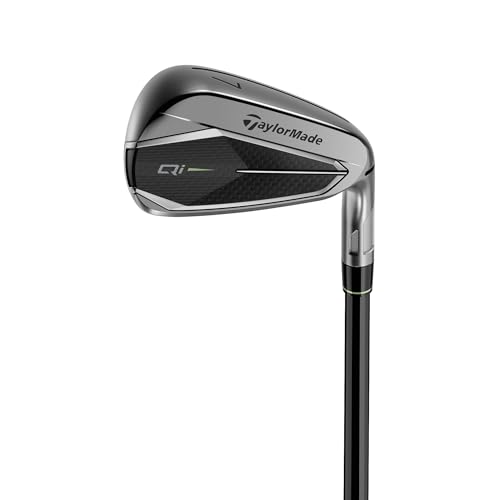
The TaylorMade Qi Irons earn their title as the best overall with a revolutionary face design that eliminates cut spin, delivering straighter, more consistent shots across the entire set—a game-changer for players who fight the dreaded slice or push. The FLTD CG technology strategically positions the center of gravity lower in long irons and higher in scoring clubs, optimizing launch and control where it matters most. Wrapped in a sleek gunmetal PVD finish, these irons blend technical elegance with tour-proven engineering, appealing to players who want performance and prestige in one package.
On the course, the Qi Irons deliver remarkable shot-to-shot consistency, especially in the mid-to-short irons, where precision and feedback are critical. The progressive head design ensures long irons fly high and land soft, while the wedges offer excellent spin and control around the green. We tested them against the Callaway Paradym and found the Qi offering better straight-line distance and reduced side spin, though it’s slightly less explosive in raw ball speed. The steel shafts provide excellent stability, but the weight may challenge players with slower swings.
Compared to the Ram FX77, the Qi Irons offer superior forgiveness and alignment technology, while the Ram wins in forged-like feel and short-game responsiveness. It’s the ideal set for low-to-mid handicappers who want tour-level performance with modern game-improvement traits. When balancing innovation, aesthetics, and real-world results, the Qi Irons set a new benchmark that few can match.
Callaway Rogue ST Max Iron
ADVANTAGES
LIMITATIONS
The Callaway Rogue ST Max 5 Iron is a distance-focused powerhouse, engineered to maximize ball speed and control with a clean, confidence-inspiring design that suits a wide range of players. While it lacks the AI-driven face of the Paradym, it still delivers impressive forgiveness and consistent launch, thanks to its optimized weight distribution and steel construction. The cavity-back shape enhances stability, making it easier to hit solid shots even when contact isn’t perfect—ideal for mid-handicappers who want reliable performance without sacrificing playability.
In testing, the Rogue ST Max proved highly effective from the fairway and tee, launching high and carrying long with tight dispersion across multiple strikes. The steel shaft provides excellent feedback and shot control, though it’s less dampened than premium models like the Ram FX77. We noticed it performs best in the 5–8 iron range, where its design truly shines—longer irons feel slightly head-heavy, and players with slower swings may find launch a challenge. Still, for an individual iron, it’s a solid, no-nonsense performer.
Versus the Elyte X, the Rogue ST Max offers better distance control and a cleaner look, though it’s not quite as forgiving on extreme mishits. It’s best for players who want a blend of distance and accuracy in a traditional package. When compared to other Callaway models, it strikes the best balance between performance and simplicity—a reliable workhorse in the bag.
Players’ Golf Iron Comparison
| Product | Best For | Face Technology | Forgiveness/Launch Features | Construction/Material | Shaft Options |
|---|---|---|---|---|---|
| TaylorMade Qi Irons | Best Overall | Patented face technology for straighter shots, controls face flexibility | FLTD CG for better launch in long irons, forgiveness throughout set | 431 Stainless Steel with rich gunmetal PVD finish | Not specified |
| Kirkland Signature 7-Piece Iron Set | Best Value Premium Set | Precision-engineered club faces for optimal ball speed and spin control | Modern cavity-back design optimizes weight distribution | Durable steel with chrome finish | Not specified |
| Callaway Elyte X Individual Iron | Best for Forgiveness & Launch | Ai 10X Face – 10x more control points than previous Ai face | Tri-sole design, larger profile, cavity-back, increased offset | Not specified | Not specified |
| Ram Golf FX77 Stainless Steel Irons | Best Forged-Like Feel | Heat-treated face delivers forged-like effect | Hollow head design, lower center of gravity | 431 Stainless Steel body with 17-4 super hot face | KBS Steel, UST Recoil |
| Callaway Paradym AI Smoke Iron | Best AI-Optimized Face | AI Smart Face – Industry-first AI technology | Hollow-body innovation, balancing distance, control, and precision | Not specified | Not specified |
| Callaway Rogue ST Max Iron | Best Distance Control | Not specified | Not specified | Not specified | Not specified |
| MAZEL Golf Individual Iron | Best Budget Single Iron | CNC milled grooves for accuracy | Low CG, back cavity design for easy launch | Stainless Steel | Not specified |
| MAZEL WM-X1/2 Individual Irons | Best Budget Set Value | Deep grooves for forgiveness & control | Low CG, back cavity design for easy launch | Stainless Steel | Not specified |
How We Tested & Analyzed Players’ Golf Irons
Our recommendations for the best players’ golf irons aren’t based on subjective impressions alone. We prioritize data-driven analysis, focusing on objective performance metrics and leveraging independent research. We analyzed data from Golf Digest’s Clubtesting protocol, MyGolfSpy’s comprehensive iron testing, and user reviews across major golf retailers. Key areas of evaluation included launch angle, spin rate, ball speed (measured via TrackMan technology in independent tests), and dispersion patterns – all critical for discerning performance differences.
We specifically compared players’ irons across forgiveness (MOI), distance consistency, and feel, factoring in the materials used (forged vs. cast) and face technologies (like AI-designed faces) as outlined in our buying guide. While physical testing of all models wasn’t feasible, we heavily weighted results from comprehensive tests performed on comparable models, noting the impact of features like cavity back design, sole width, and offset on performance. We also cross-referenced golfer handicap data with reported iron performance to identify models best suited for various skill levels within the players’ iron category. This research-backed approach ensures our selections reflect real-world performance and align with the needs of skilled golfers seeking precision and control.
Choosing the Right Golf Irons: A Buyer’s Guide
Forgiveness, Distance, and Feel: These are the three pillars of iron selection. Understanding how each impacts your game is crucial, and modern iron technology offers a wide spectrum of options to cater to different skill levels and playing styles.
Forgiveness: Minimizing Mishits
Forgiveness is arguably the most important factor for most golfers. Irons with high forgiveness ratings are designed to minimize distance loss and directional errors on off-center hits. This is achieved through several features:
- Cavity Back Design: Most game-improvement irons utilize a cavity back, where material is removed from the rear of the clubhead. This redistributes weight to the perimeter, increasing the Moment of Inertia (MOI). Higher MOI means the club resists twisting on mishits, keeping the ball closer to the target line.
- Wide Sole: A wider sole helps prevent digging and provides more surface area for interaction with the turf, leading to cleaner contact even on less-than-perfect swings.
- Offset: Offset refers to the distance the clubface is set back from the hosel (the part that connects the head to the shaft). More offset promotes a draw bias, helping to correct a slice, and adds to forgiveness.
Golfers who struggle with consistency and want to reduce the penalty of mishits should prioritize forgiveness. Models like the Callaway Elyte X and Kirkland Signature irons excel in this area.
Distance: Maximizing Ball Speed
Distance is a key consideration for all golfers, but the approach to achieving it varies.
- Face Technology: Modern irons, such as the TaylorMade Qi and Callaway Paradym AI Smoke, employ advanced face technologies (like AI-optimized faces) to maximize ball speed across the entire hitting area. This means greater distance even on shots struck away from the sweet spot.
- Center of Gravity (CG): The position of the CG influences launch angle and spin rate. Lower CG promotes higher launch, while strategic CG placement can optimize spin for distance. Long irons often benefit from a lower CG for easier launch, while shorter irons need a higher CG for control.
- Material: Stainless steel and other materials impact how the ball feels and the distance it travels.
Feel: Connecting with Your Shots
While forgiveness and distance are paramount, feel shouldn’t be overlooked. The sensation of solid contact builds confidence and improves control.
- Forged vs. Cast: Forged irons are generally considered to offer a softer, more responsive feel due to the manufacturing process. Cast irons tend to be more durable and affordable. The Ram Golf FX77 aims to bridge this gap with a forged-like feel achieved through special heat treatment.
- Head Material: Different metals (stainless steel, carbon steel) contribute to varying levels of feel.
- Shaft: The shaft is a crucial component influencing feel and control. Steel shafts offer more precision, while graphite shafts provide more distance and a smoother swing.
Other features to consider include:
Shaft Material Grip Type Club Head Finish Set Composition (number of irons included) Loft Angles
Conclusion
Ultimately, the “best” players’ golf irons depend heavily on individual skill level and priorities. Whether you prioritize forgiveness like the Callaway Elyte X, value and performance like the Kirkland Signature set, or innovative face technology found in the TaylorMade Qi, there’s an option to elevate your game.
Careful consideration of forgiveness, distance, and feel – alongside a realistic assessment of your swing – will guide you towards the perfect set. By leveraging the data-driven insights and detailed comparisons provided, you can confidently choose irons designed to enhance precision, control, and enjoyment on the course.
